 FIELD NOTES / GRENADA 2026
CHAPTER 02 / THURSDAY, 22 OCTOBER 2026
People, places and shared benefits.
Tourism, planning and community relationships brought the blue economy conversation into the everyday decisions of MPA management.
View Day 2 photographs · 31 images ↗DAY TWO / FROM OPPORTUNITY TO MANAGEMENT
Who shapes the future of a protected area?
Day 1 examined how ocean value can support conservation. Day 2 turned towards the people and decisions that determine whether those opportunities work: tourism operators, fishers, communities, planners and the people who control budgets.
The morning began by returning to the previous day. Kenrick Chambers reflected on the Blue Bonds case study, and the workshop continued its MPA management updates. Danroy Connell’s account of the South Coast Marine Conservation Area brought the discussion back to water quality, coastal activity and the practical pressures managers face.
That grounding matters throughout the chapter. A tourism strategy needs evidence from the site. A zoning map needs the knowledge of its users. A financing proposal needs the relationships and systems that can carry it through.
01 / SUSTAINABLE TOURISM · SIMON McARTHUR
Manage the experience, monitor the effects.
In his prerecorded presentation, Simon McArthur described sustainable tourism as a continuing process of improvement. He connected the visitor experience with a healthy host community, a healthy environment and a healthy economy.
His discussion challenged the idea that a single visitor number can capture the pressures on a protected area. People behave differently, activities create different impacts, and the condition of a site changes.
He described a management cycle built around agreeing what healthy tourism should look like, monitoring indicators, and adapting the response when conditions move outside an acceptable range. Restrictions remain one possible response; they sit within a wider process of learning and adjustment.
The practical question becomes more specific than how many visitors arrived: what happened at this site, what condition are we trying to maintain, and what change would help?
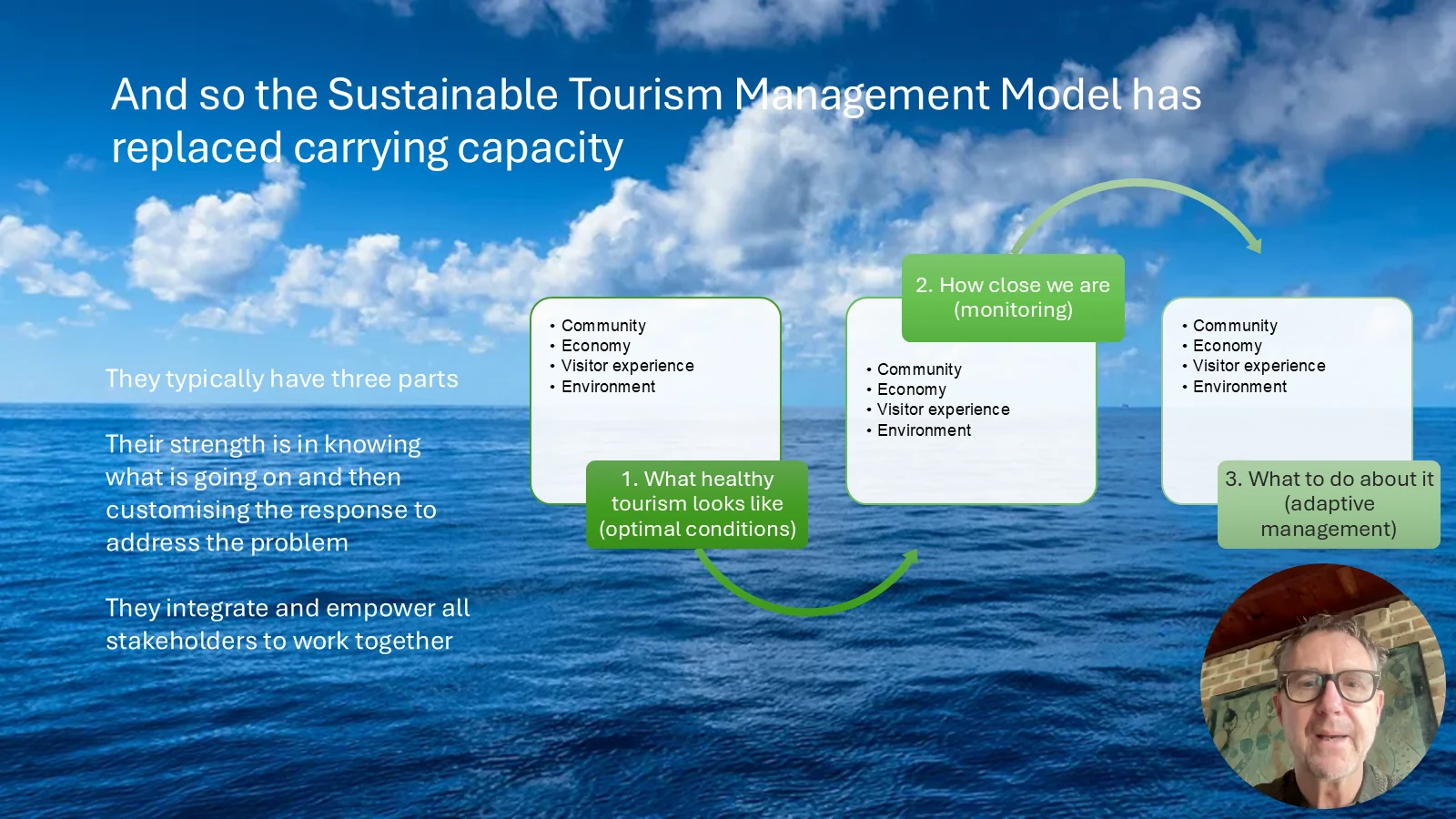
Make the desired visitor, community and environmental conditions explicit.
Use evidence to understand how the site is performing.
Adjust management and check whether conditions improve.
IN DISCUSSION / YASHIN DUJON & DELONIE FOREMAN
Tourism partners are part of the management picture.
The mentor discussion brought the tourism framework back to protected-area practice. Yashin Dujon spoke about seeing protected areas through the lens of destination management and involving communities and tourism operators in the work.
Delonie Foreman explained why visitor behaviour and site condition matter as much as a head count. She described TASA’s use of active monitoring and management responses, including temporarily removing a dive mooring from an area where reef health needed attention.
Her example connects to the previous day’s Blue Talks story: the visitor relationship includes both the experience people have and the responsibility to protect the place that makes it possible.
 Yashin DujonBelize Audubon SocietyParticipant profile ↗
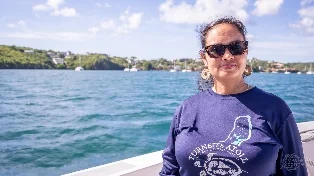 Delonie ForemanTurneffe Atoll Sustainability AssociationParticipant profile ↗
Revisit Delonie’s Day 1 Blue Talks case study ↗
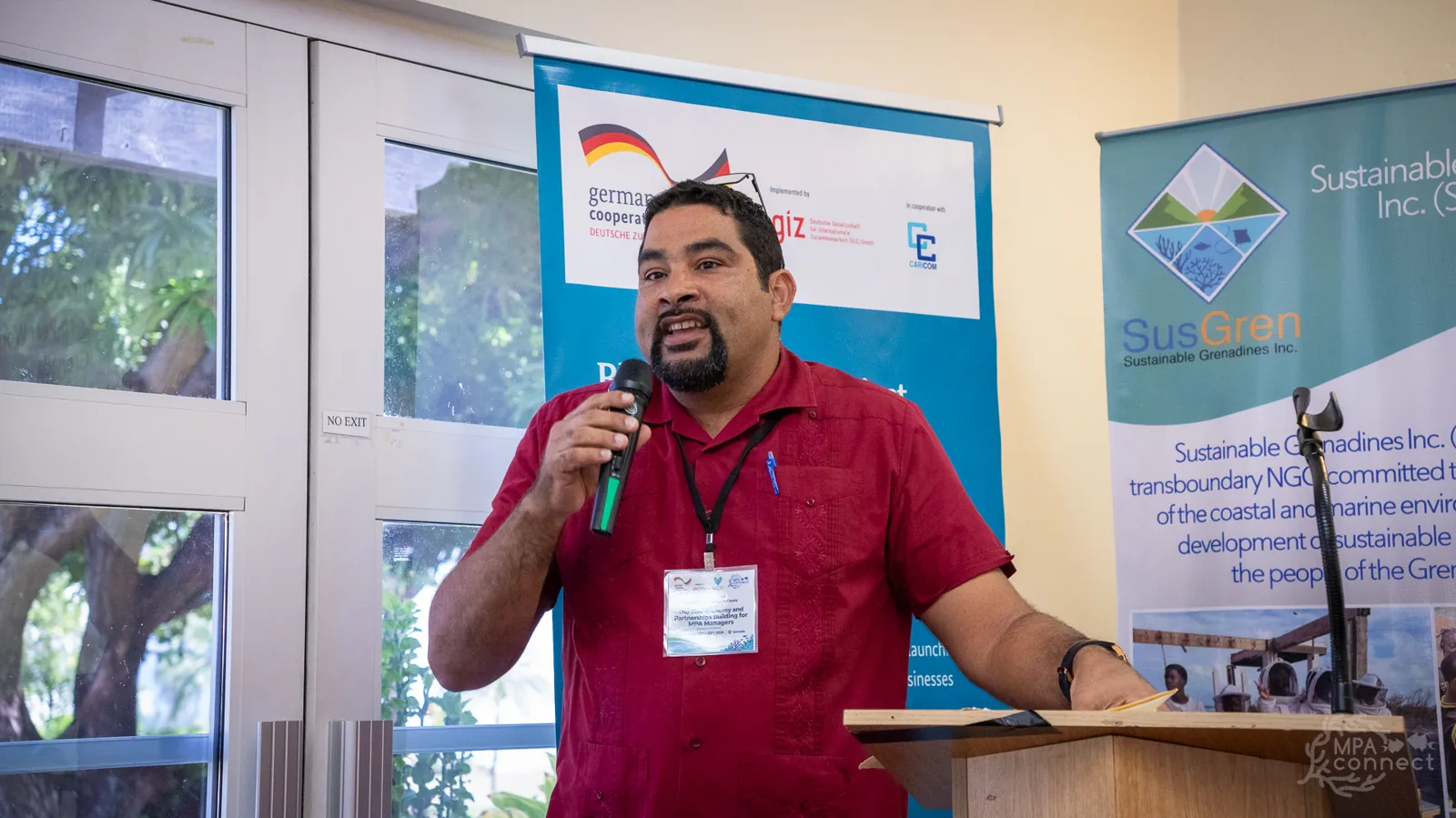
02 / BELIZE MARINE SPATIAL PLANNING · SAMIR ROSADO
A map begins with people who use the sea.
Samir Rosado’s remote presentation focused on how stakeholder knowledge informed Belize’s marine spatial planning process. He described a process built with users of the ocean, supported by scientific analysis.
In his explanation, marine spatial planning considers where and when activities take place and how uses interact with each other and the environment. It creates a way to examine conflict, compatibility and the different objectives attached to the same space.
For protected-area managers, this makes participation in planning part of conservation work. Local knowledge of fishing, navigation, tourism and habitats has to enter the discussion before a map is treated as a finished answer.
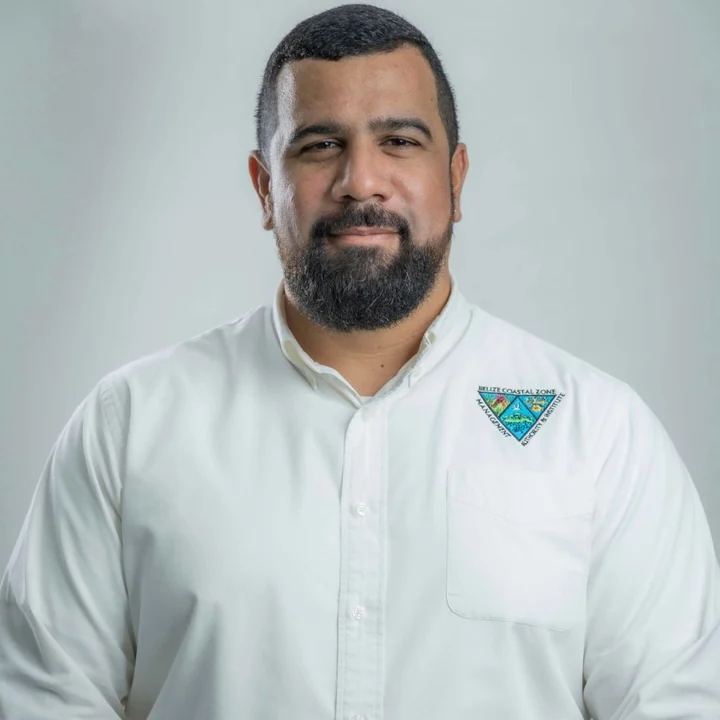 Samir RosadoLead, Marine Spatial Plan · Coastal Zone Management AuthorityParticipant profile ↗
THE GRENADINES / PARTICIPATORY PLANNING · ORISHA JOSEPH
Plan for the connections between islands.
Orisha Joseph’s Grenadines example put everyday island connections at the centre of the planning story. Fishing, transport, work and family relationships cross the boundary between Grenada and St. Vincent and the Grenadines.
She described using maps, stakeholder meetings and a smaller marine-resource-user group to develop and test zoning scenarios before taking them to a wider group. Conservation areas were considered alongside fishing, tourism, transportation and mariculture.
The case illustrates why a shared planning space cannot be understood through a single sector. A route between islands may be a livelihood, a transport link and part of a community’s daily life at the same time.
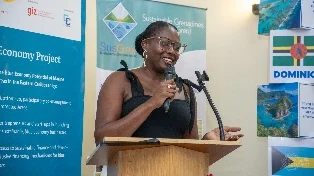 Orisha JosephExecutive Director · Sustainable Grenadines IncParticipant profile ↗
03 / CELIA MAHUNG · CHAMPIONS & AMBASSADORS
Close the distance between the site and the decision.
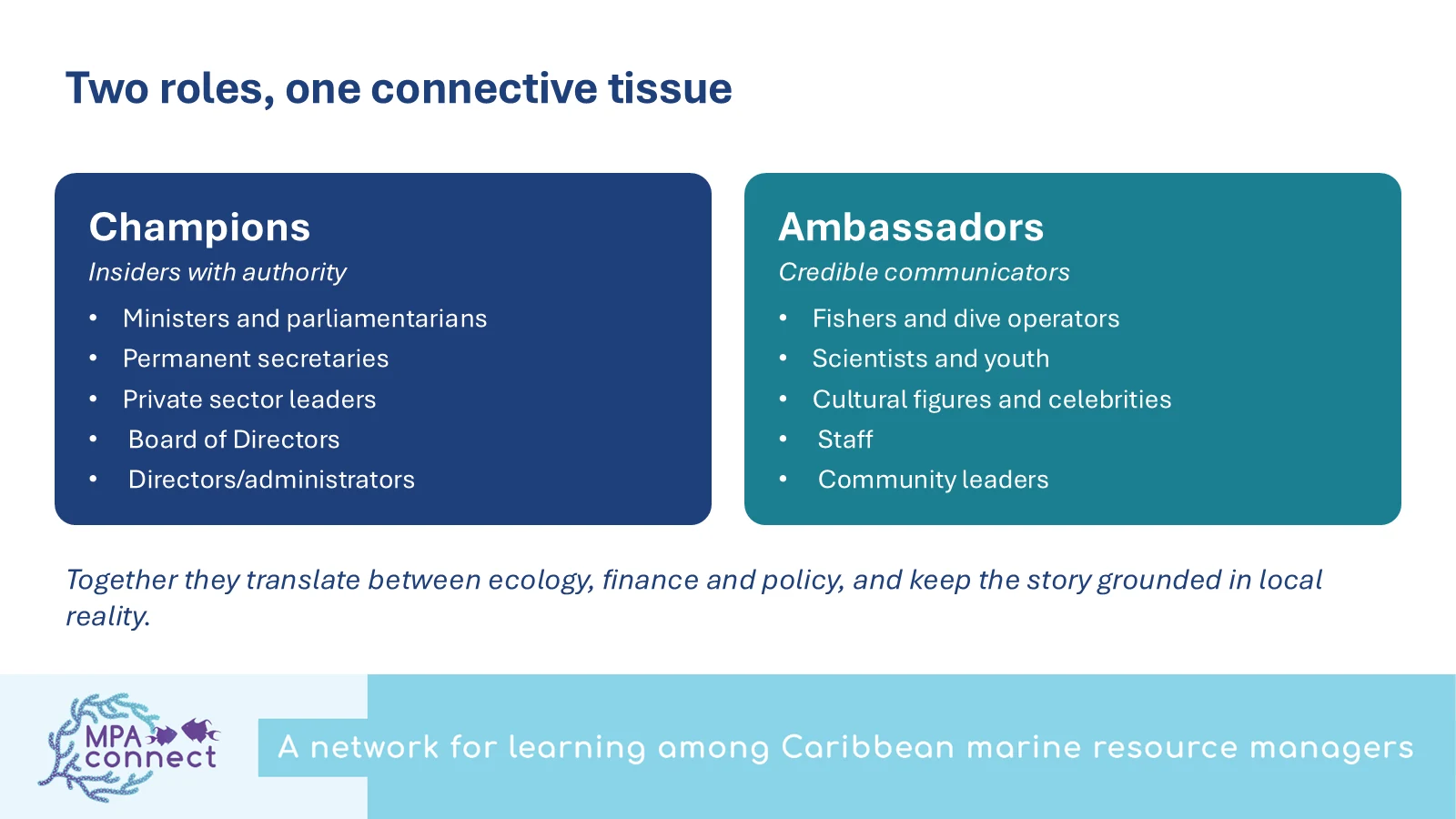
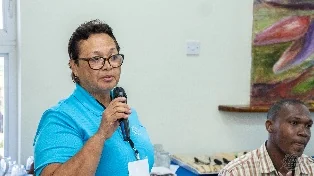
Celia Mahung asked participants to consider who could help connect the reality of MPA management with the people who shape policy, investment and budgets.
Her presentation distinguishes champions with authority from ambassadors who communicate credibly. A champion might sit on a board or hold a leadership role. An ambassador might be a fisher, community leader, scientist, young person or staff member.
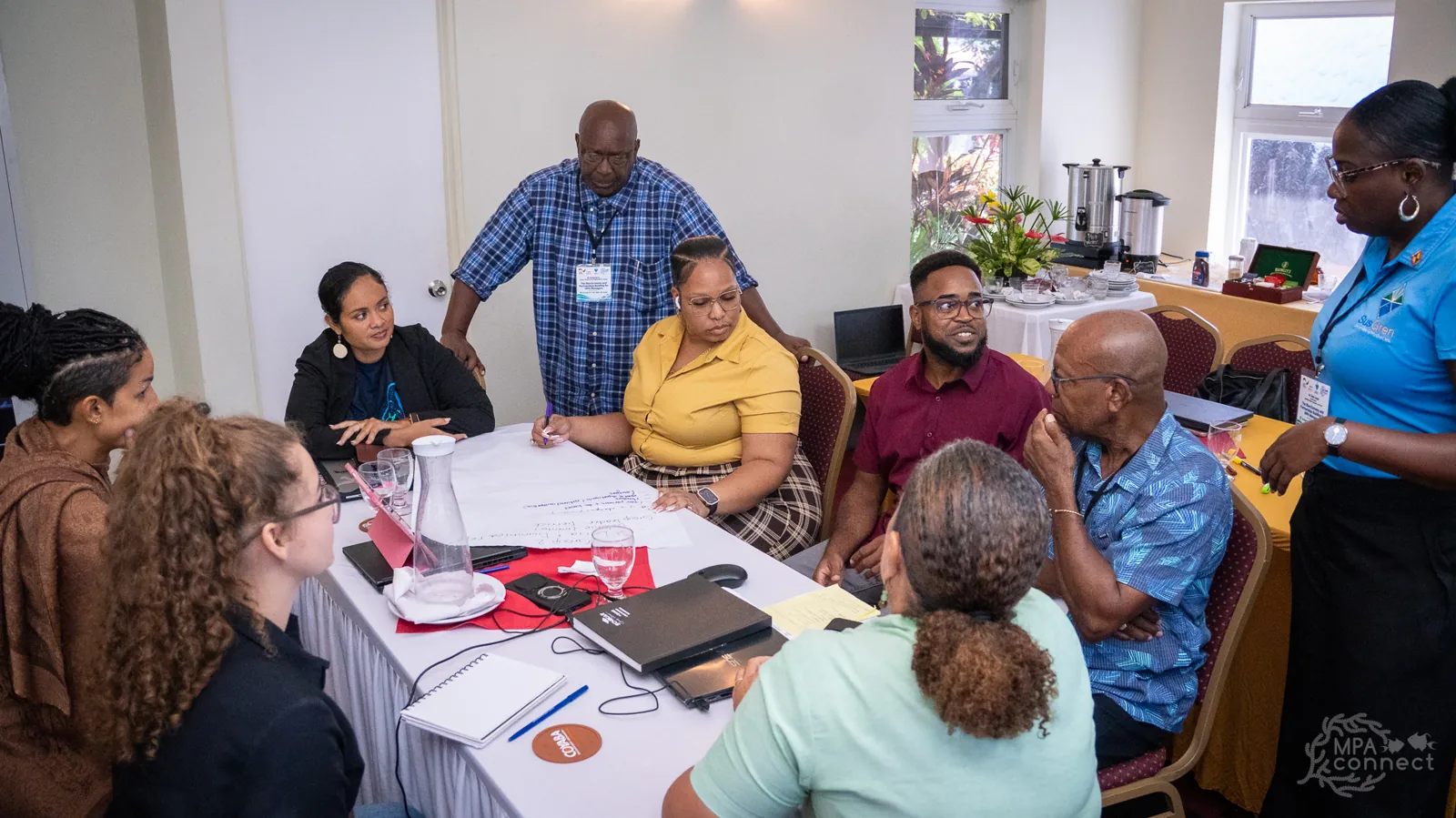
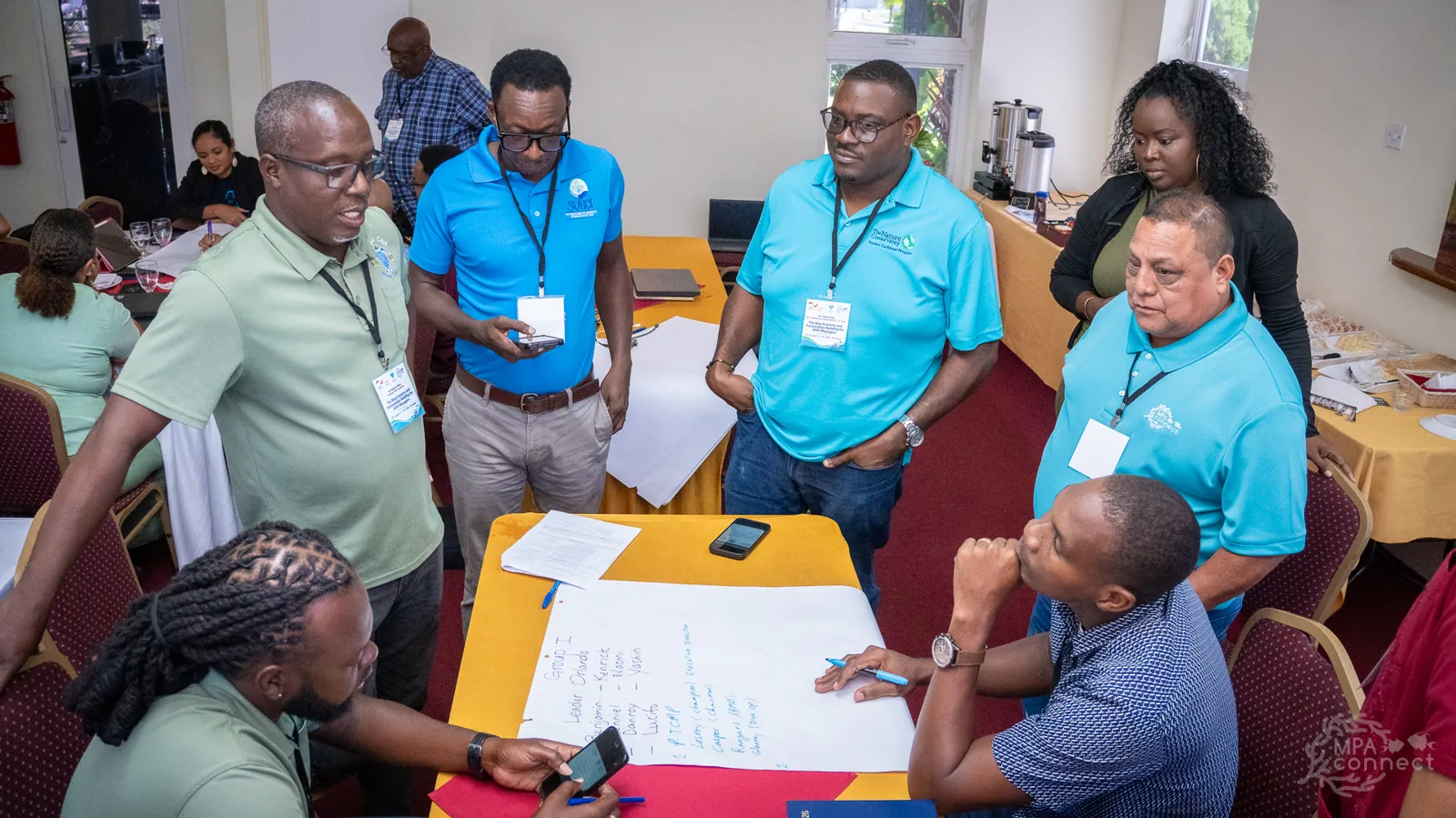
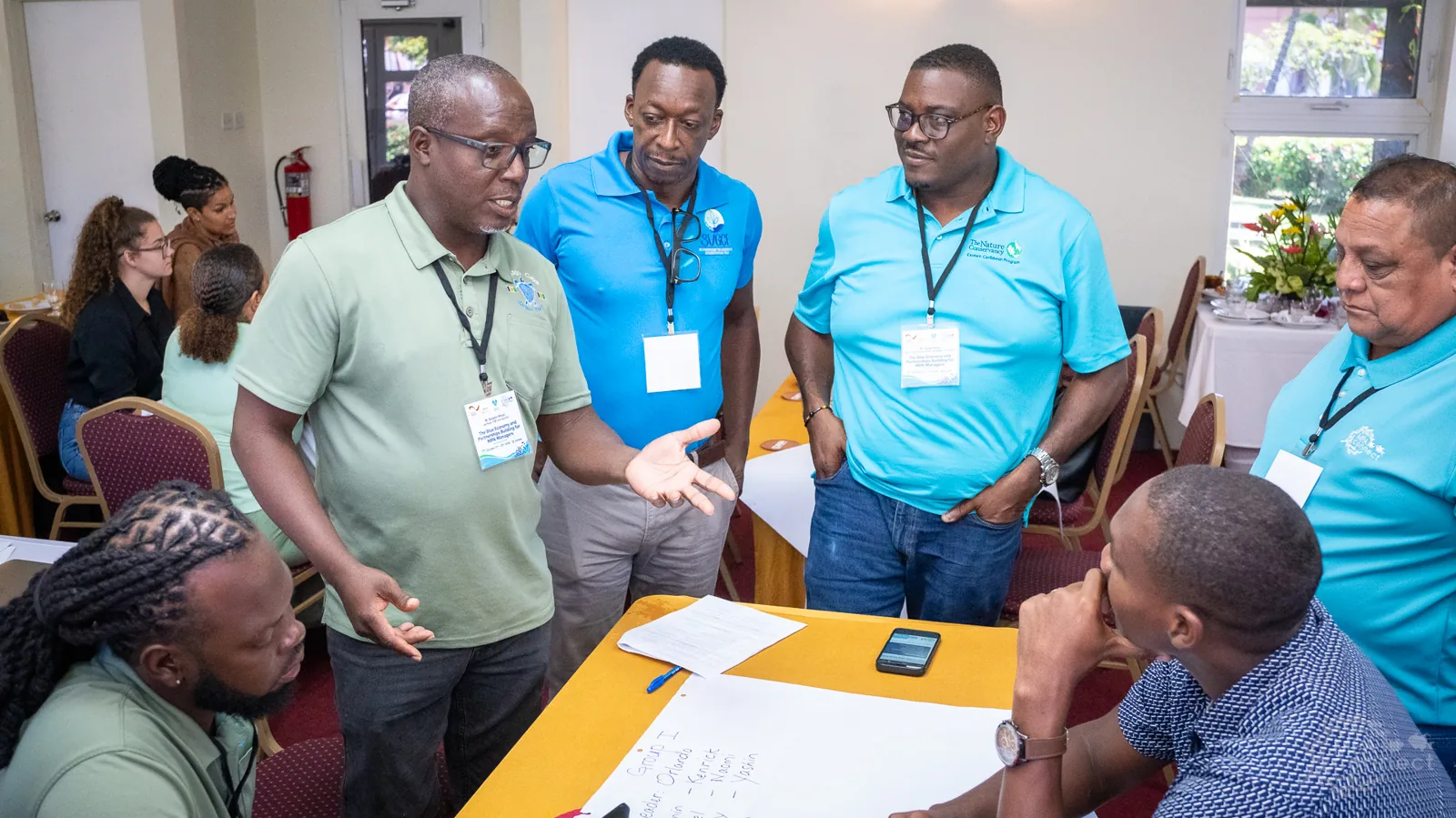
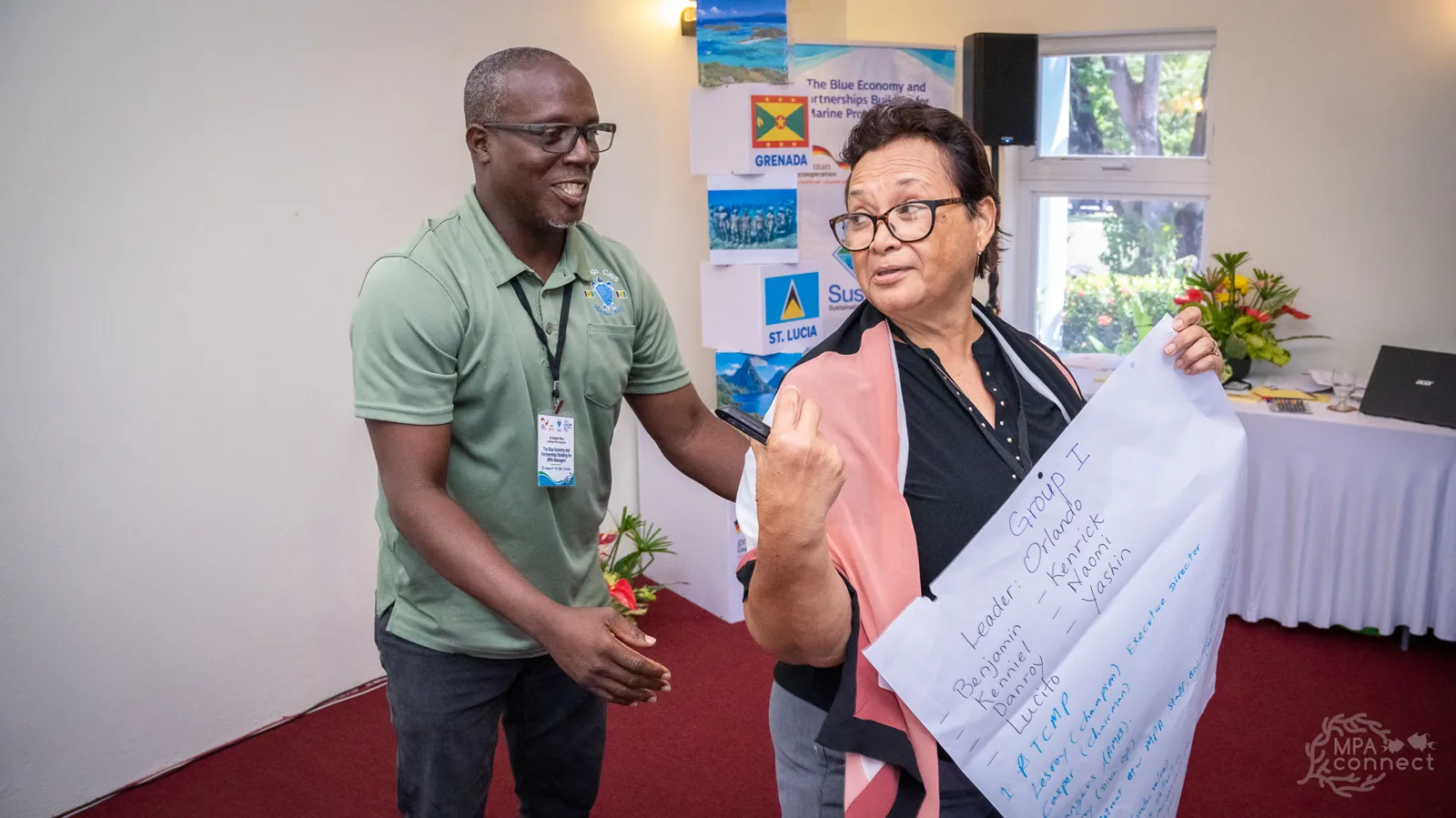
The group exercise made the idea concrete: identify those people, consider why underfunding persists, and discuss the strategies that could bring support from decision-makers, investors and communities.
The later slides extend the discussion to a clear request, credible evidence and a continuing connection to frontline work. They also name risks, including symbolic support that never becomes resources for management.
 Celia MahungMPAConnect MentorParticipant profile ↗
04 / LUCITO AYUSO · COMMUNITY BENEFIT-SHARING
Trust takes time, and time needs a place in the budget.
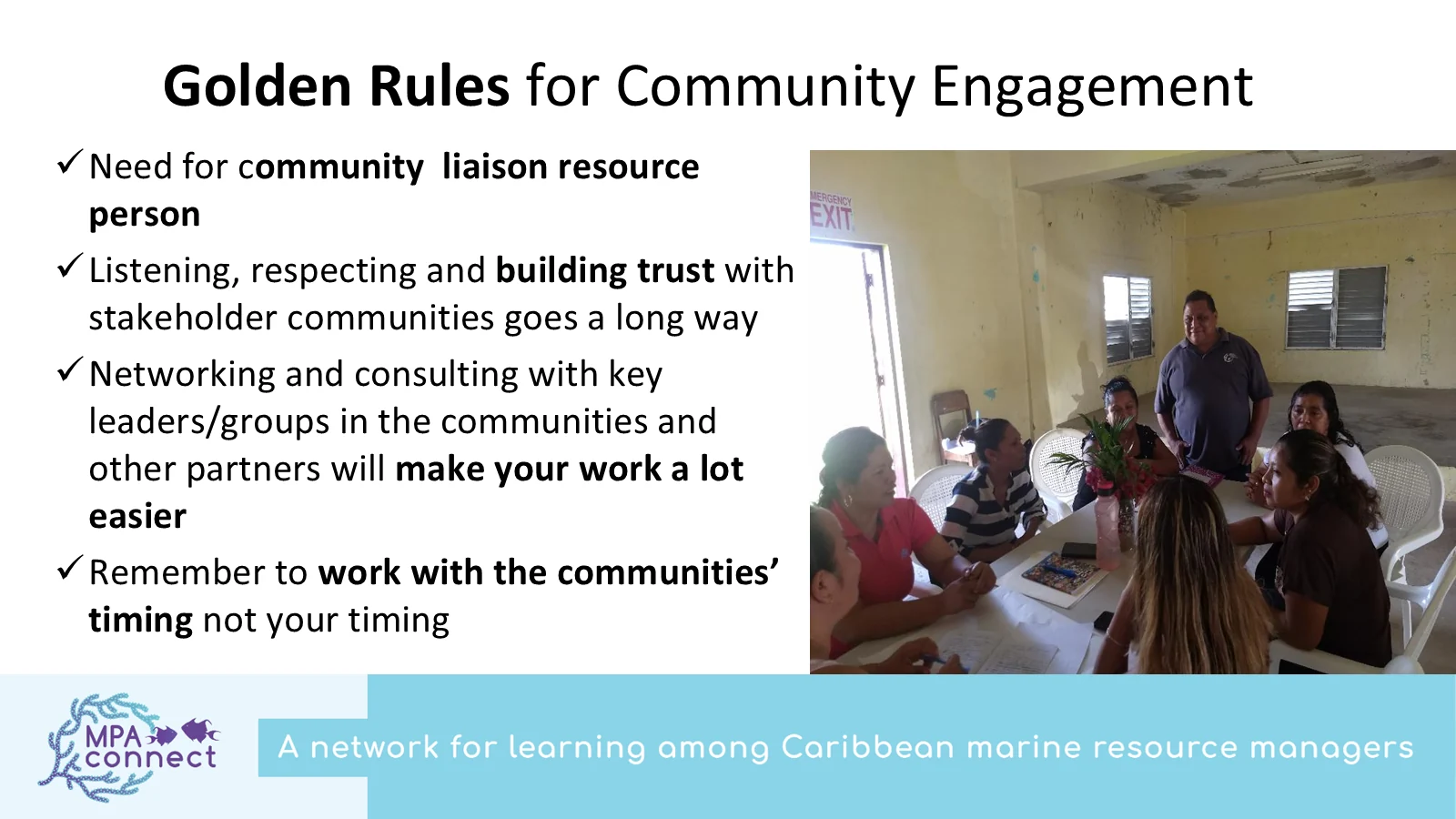
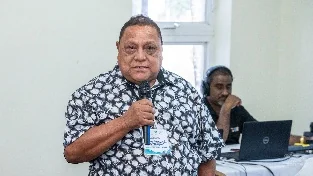
Lucito Ayuso brought community engagement into the discussion as a practical management responsibility. His presentation stressed listening, respect, local relationships and working with communities’ timing.
He described the value of a dedicated community liaison person and the need to fund that work. His slides connect youth education, boat-to-boat outreach and supplemental livelihoods with stewardship and the relationship between resource users and managers.
Support livelihoods with communities.
The examples include beekeeping, agro-processing and lionfish jewellery. The purpose is to supplement livelihoods and diversify opportunities; the discussion does not suggest that fishers simply stop fishing.
His Roatán Marine Park material brings livelihoods, perceptions, governance, resource dependence and communication into the same management picture. The wider discussion warned against designing an activity for people before understanding what they want to do.
 Lucito AyusoMPAConnect MentorParticipant profile ↗
05 / APPLYING A BLUE ECONOMY LENS
Return to the financing idea with better questions.
The later exercise returned to financing mechanisms identified in previous MPAConnect workshops. Celia Mahung and Orisha Joseph asked teams to reconsider those priorities through a blue economy lens.
The earlier work had considered financial impact, likelihood of success and ease of implementation, alongside obstacles and possible responses. The Day 2 review asked participants to look again at those ideas in the light of the workshop’s wider themes.
This gives the chapter a practical connection back to Day 1. A financing opportunity has to be considered alongside the people involved, the effects on the marine environment and the capacity to put the idea into practice.
Bring site experience and resource users into the decisions that affect them.
Explain how the activity relates to conservation, livelihoods and local priorities.
Identify the people, funding, monitoring and follow-up required.
DAY TWO / THE PHOTO RECORD
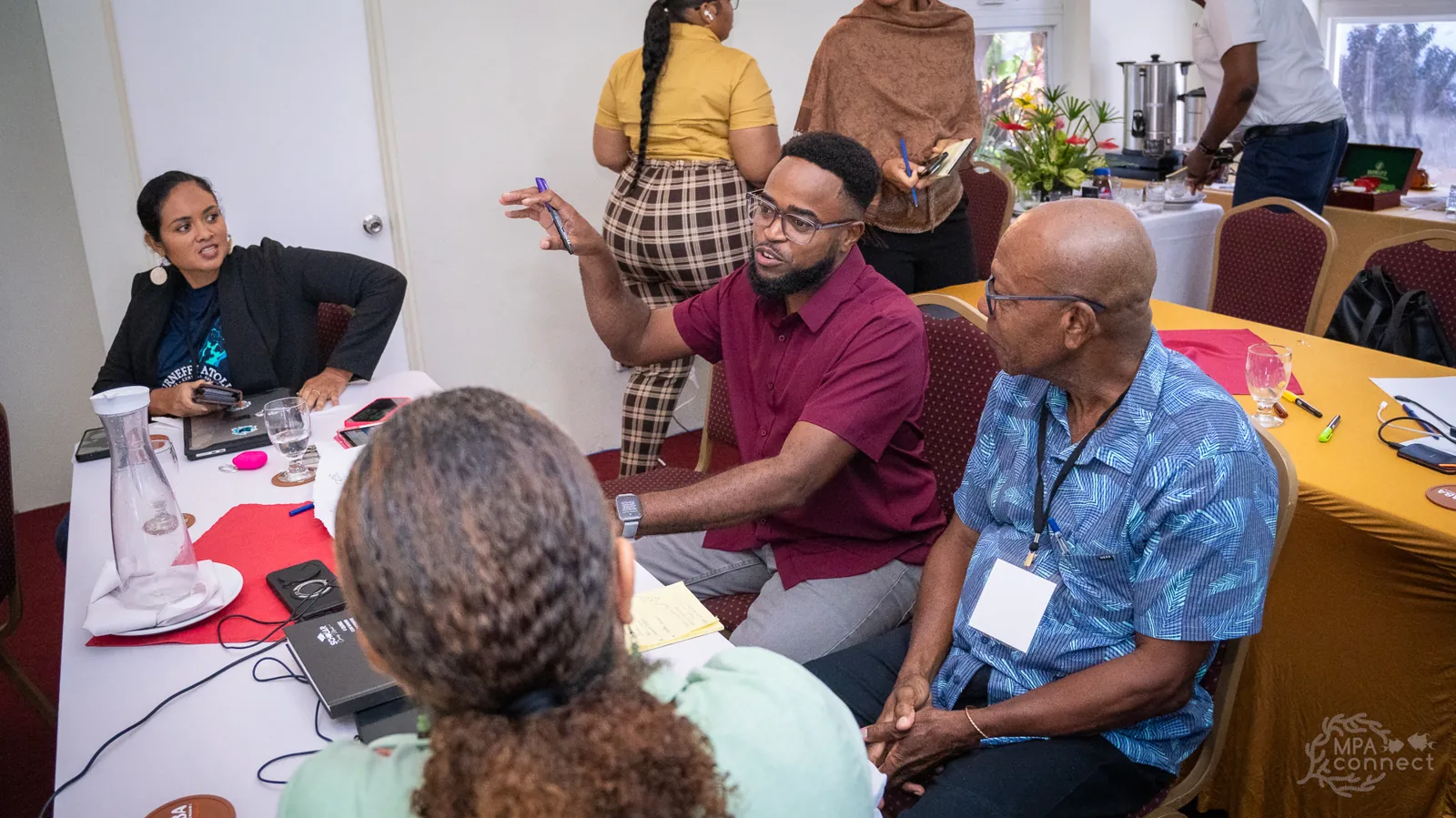
Conversations around the tables.
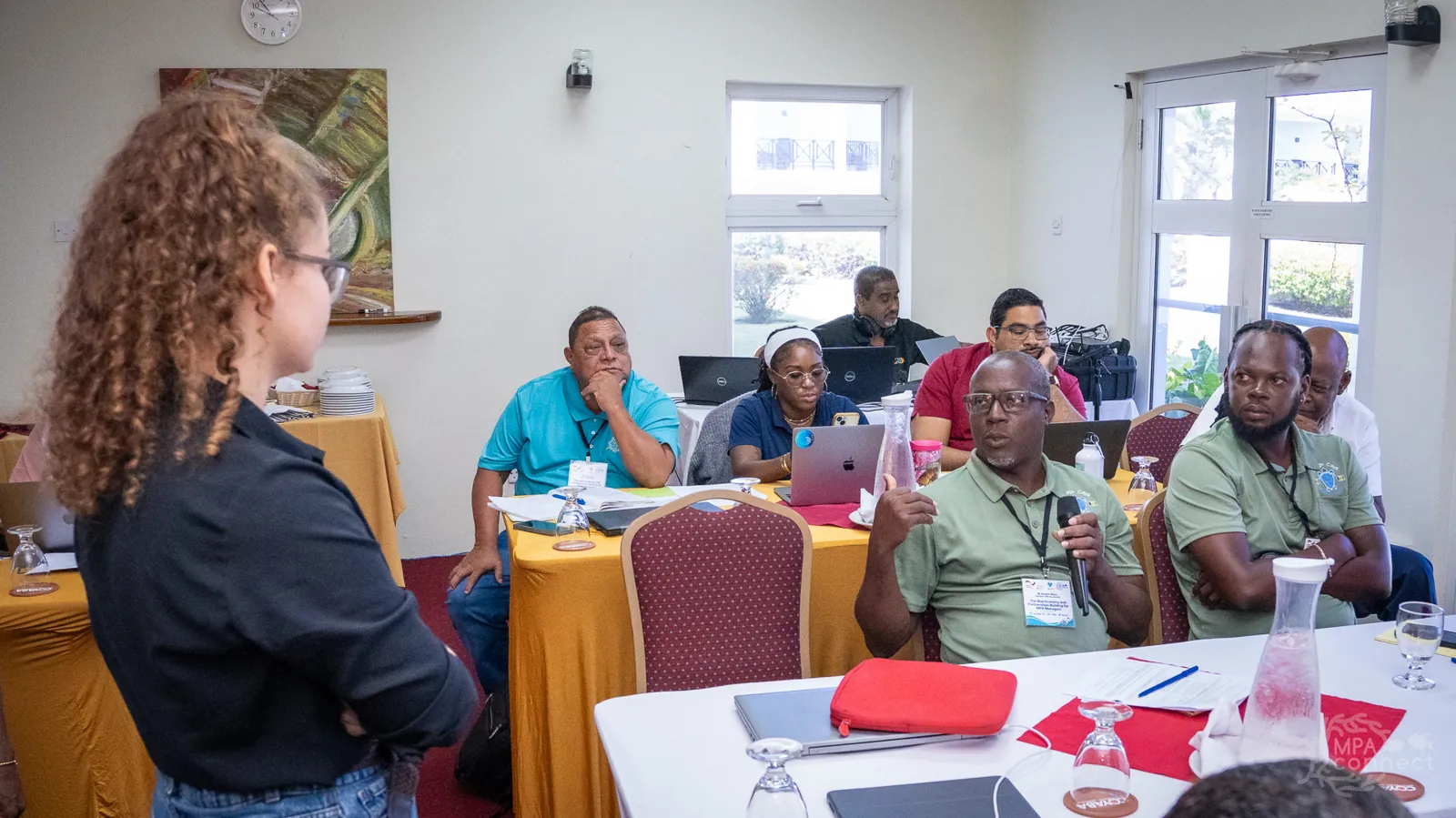
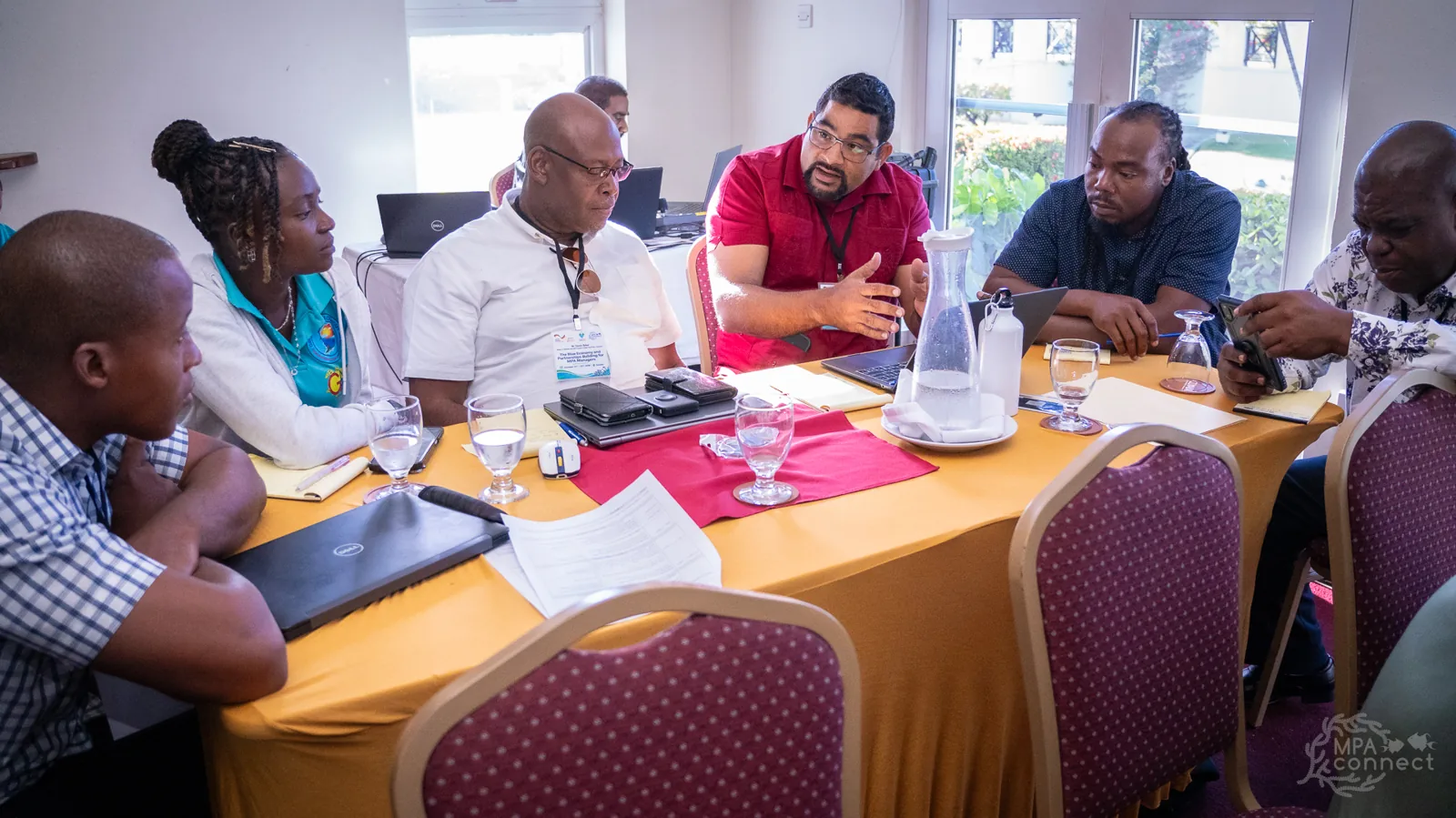
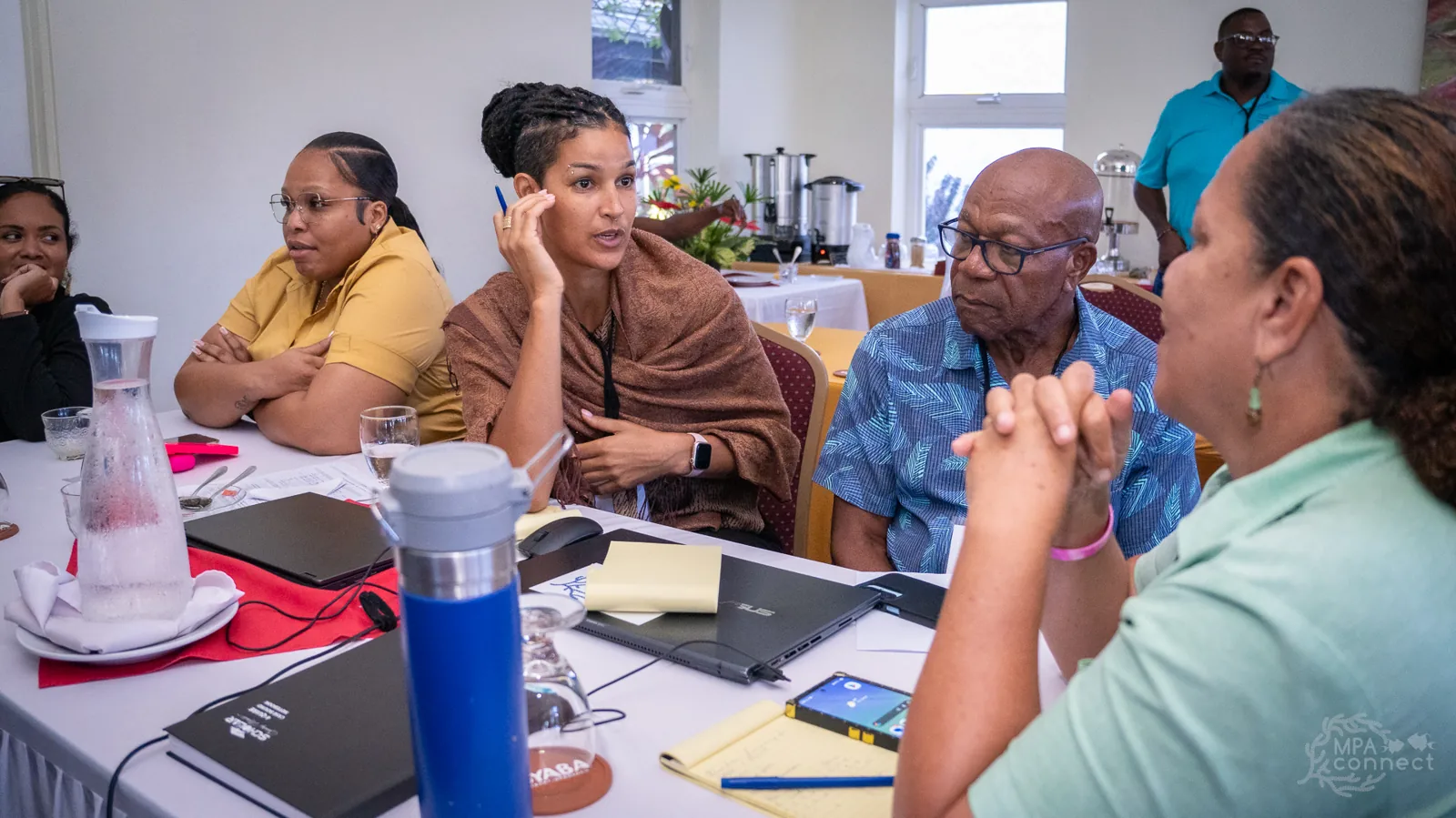
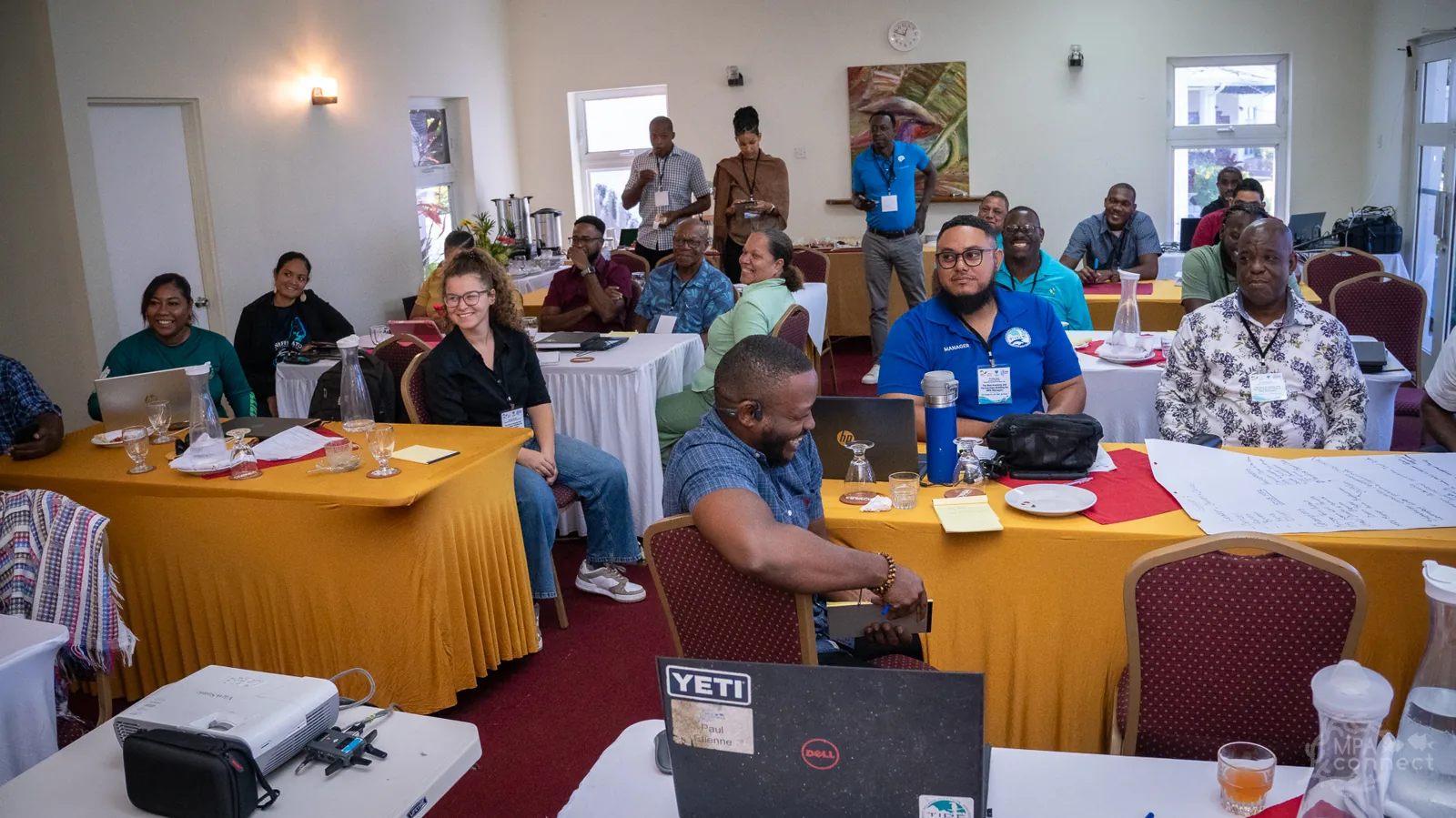
The photographs record the exchange in different forms: questions from the room, shared notes, remote contributions and the smaller moments between sessions.
Browse all 31 Day 2 photographs. Select an image to enlarge it.
Explore all 31 Day 2 photographs ↗GO DEEPER / DAY TWO